


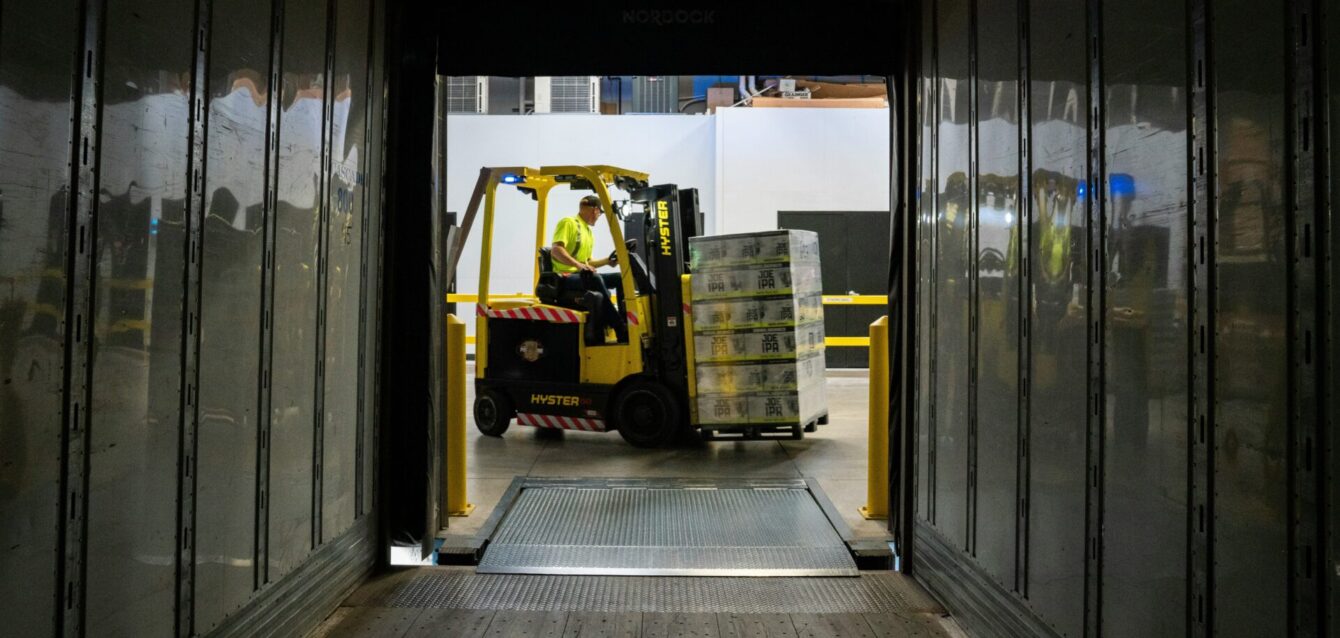
In brief: refrigerated groupage is the ideal solution when a food business needs to ship smaller quantities of goods but cannot afford to delay deliveries until a full lorry load is available. It helps reduce transport costs, maintain regular shipment schedules, and preserve product quality through strict temperature control across the entire supply chain.
In the food logistics sector, finding the right balance between service quality, delivery speed and cost efficiency is a daily challenge. Not every company generates sufficient volumes to justify a dedicated vehicle for every shipment. In these cases, refrigerated groupage transport offers an effective way to optimise freight management without compromising the cold chain.
What Is Refrigerated Groupage?
Refrigerated groupage is a transport method that consolidates goods from different customers within the same vehicle, provided they share compatible destinations or transport routes.
When applied to temperature-controlled food transport, consolidation takes place while continuously maintaining the thermal conditions required to ensure proper product preservation.
In other words, groupage allows companies shipping smaller volumes to access professional food transport services, paying only for the space they actually use.
| Aspect | Refrigerated Groupage |
|---|---|
| Shipping method | Goods from multiple customers in the same vehicle |
| Temperature control | Maintained throughout the entire journey |
| Destination | Shared or compatible routes |
| Objective | Optimise transport costs and delivery frequency |
| Main sectors | Food, chilled and frozen products |
Why More Food Companies Are Choosing Groupage
Many businesses in the food sector face a common challenge: the need to make frequent deliveries without having enough volume to fill an entire lorry.
Examples include:
- cheese producers;
- fresh gastronomy manufacturers;
- frozen food producers;
- artisan food businesses;
- importers and distributors of speciality foods;
- companies exporting food products across Europe and the United Kingdom.
Waiting to accumulate enough goods to fill a vehicle can lead to:
- longer delivery times;
- increased stock held in storage;
- greater capital tied up in inventory;
- reduced product freshness.
By contrast, groupage transport allows businesses to maintain more regular shipments and improve stock turnover.
When Is Refrigerated Groupage Really Cost-Effective?
1. When Volumes Do Not Justify a Dedicated Vehicle
This is by far the most common scenario.
If a shipment only occupies part of a vehicle, using dedicated transport may be economically inefficient. With refrigerated groupage, transport costs are shared among several shipments, allowing food SMEs to access professional logistics services without covering the full cost of the journey.
2. When Frequent Deliveries Are Required
In the food industry, delivery frequency is often more important than shipment volume.
Many customers prefer:
- weekly deliveries;
- scheduled replenishments;
- consistent and punctual supply schedules;
rather than waiting for larger but less frequent shipments.
Groupage provides greater operational flexibility and supports more efficient inventory management.
3. When Exporting Food Products Across Europe
For many Italian food exporters, arranging full-load transport for every international customer is not always financially sustainable.
Refrigerated groupage transport makes it possible to:
- serve multiple customers through a single logistics plan;
- reach several European destinations;
- reduce shipping costs;
- maintain cold chain continuity.
This is why it has become a widely used solution in international food transport.
The Main Challenge: Protecting the Cold Chain
In food product transportation, the most critical factor is not simply making the delivery but maintaining the correct temperature throughout the entire journey.
Even minor temperature fluctuations can affect product quality and compromise shelf life.
For this reason, refrigerated groupage requires particular attention to:
- route planning;
- optimisation of loading and unloading operations;
- temperature monitoring;
- correct separation of different product categories;
- continuous transport supervision.
The quality of a temperature-controlled transport service depends not only on the vehicle itself but on the entire logistics operation behind it.
Groupage and Temperature-Controlled Transport: Two Different Concepts
A common misconception is that groupage and temperature-controlled transport mean the same thing.
In reality, they are two distinct concepts.
Groupage Concerns:
- shipment organisation;
- shared loading space;
- optimisation of logistics costs.
Temperature-Controlled Transport Concerns:
- product preservation;
- maintaining required temperatures;
- food safety compliance;
- protection of the cold chain.
A specialised logistics provider must be able to integrate both requirements, ensuring that freight consolidation does not compromise transport quality.
Benefits of Refrigerated Groupage for Food Businesses
Reduced Logistics Costs
Companies pay only for the space they use, avoiding the expense of a dedicated vehicle.
Increased Delivery Frequency
There is no need to wait until large volumes have accumulated before arranging a shipment.
Greater Commercial Flexibility
More frequent deliveries help businesses better support distributors, wholesalers and retail outlets.
Improved Stock Management
Reducing inventory accumulation improves product rotation and minimises the risk of excess stock.
Wider Market Coverage
Groupage enables small and medium-sized businesses to access both domestic and international markets more efficiently.
Which Products Are Best Suited to Refrigerated Groupage?
Many food categories can benefit from this transport solution, including:
- cheese and dairy products;
- cured meats;
- fresh delicatessen products;
- packaged chilled foods;
- ready meals;
- fresh products supplied to retail chains;
- frozen foods;
- speciality food products destined for export markets.
Naturally, each shipment should be assessed according to the specific characteristics of the product, its temperature requirements, and the final destination.
Planning Makes the Difference
Behind every efficient groupage shipment is far more than simply a vehicle leaving the depot.
Successful operations require coordination between:
- the producer;
- the warehouse;
- the logistics operator;
- the transport provider;
- the final consignee.
Service quality depends on the ability to plan collections, consolidations, transport routes and deliveries effectively, minimising disruption and ensuring operational continuity.
For companies like Fresh Ways, specialising in B2B refrigerated transport and food logistics between Italy, Europe and the United Kingdom, this means helping producers and distributors maintain high quality standards across the entire cold chain.
Conclusion
Refrigerated groupage is particularly advantageous when shipment volumes do not justify a dedicated vehicle but delivery requirements demand consistency, reliability and temperature control.
When properly organised, it can reduce logistics costs, increase delivery frequency and ensure food products remain protected throughout transport.
For food producers, importers and distributors, refrigerated groupage is not simply about sharing vehicle space. It is about achieving the right balance between operational efficiency, cold chain continuity and service quality.
Need to Organise Food Shipments in Italy, Europe or the United Kingdom?
Effective transport planning can make a significant difference in protecting product quality, maintaining cold chain integrity and improving the overall efficiency of your logistics supply chain.
Contact the Fresh Ways team to discuss the most suitable solution for your B2B refrigerated transport requirements.